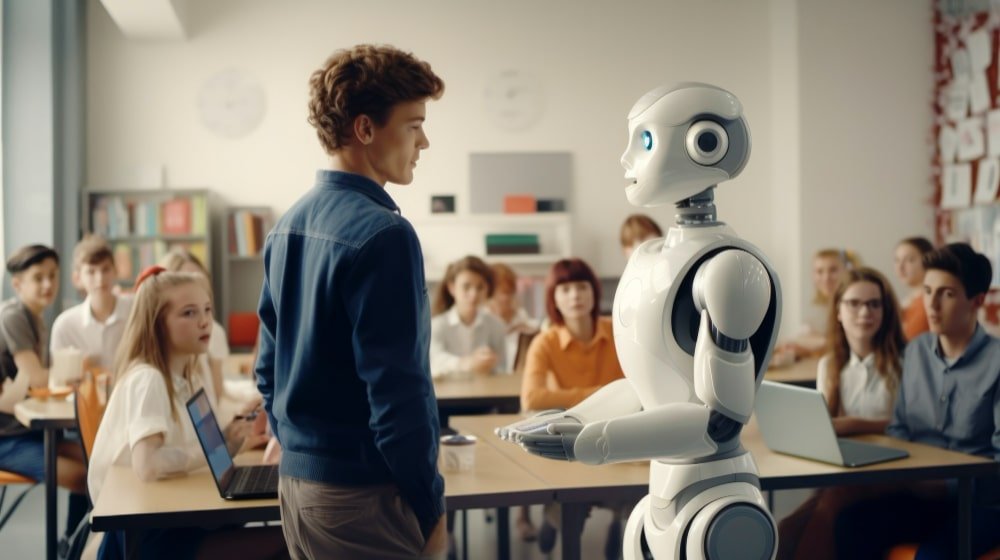
Artificial Intelligence (AI) is rapidly reshaping the landscape of education, offering innovative solutions for personalized learning, administrative efficiency, and enhanced student engagement. As schools and universities adopt AI-powered tools, the future of learning is becoming more adaptive, accessible, and data-driven.
Introduction to AI in Education
What is AI in Education?
AI in education refers to the use of artificial intelligence technologies to improve teaching and learning processes. This includes tools like adaptive learning platforms, intelligent tutoring systems, and automated grading systems.
Brief History of AI in Learning
From simple computer-assisted learning programs in the 1960s to modern AI-powered platforms, the integration of AI in education has steadily evolved. Today, AI is capable of analyzing learning patterns and providing real-time feedback for students and teachers.
Benefits of AI in Education
Personalized Learning for Students
AI tailors educational content to meet individual student needs, helping learners progress at their own pace. This personalization enhances understanding and improves learning outcomes.
Intelligent Tutoring Systems
AI-driven tutoring systems can provide instant guidance and support, simulating one-on-one teaching experiences.
Automating Administrative Tasks
From grading assignments to managing schedules, AI reduces teachers’ workload, allowing them to focus more on instruction and student engagement.
Enhancing Accessibility for Students with Disabilities
AI tools such as speech recognition, text-to-speech, and predictive text help make education more accessible to students with diverse learning needs.
AI-Powered Tools and Technologies in Education
Adaptive Learning Platforms
These platforms adjust learning content based on a student’s performance, ensuring a tailored learning journey.
AI-Based Assessment and Grading
AI can grade assignments and exams quickly and fairly, providing detailed insights into student performance.
Virtual Classrooms and Chatbots
AI chatbots can answer student queries instantly, while virtual classrooms enhance remote learning experiences.
Learning Analytics and Predictive Insights
AI analyzes data to predict learning outcomes and identify students who may need additional support.
Challenges and Concerns of AI in Education
Data Privacy and Security Issues
Handling sensitive student information requires robust data protection measures to prevent misuse.
Teacher and Student Adaptation
Integrating AI requires training and adaptability from both teachers and students.
Ethical Considerations
Decisions made by AI systems must be transparent and unbiased to maintain fairness in education.
Risk of Over-Reliance on AI
While AI is powerful, human interaction remains essential for holistic education.
The Future of AI in Education
Emerging Trends and Innovations
AI will continue evolving, with innovations like virtual reality learning, AI-driven career guidance, and gamified education experiences.
AI and Lifelong Learning
AI enables continuous learning opportunities for students of all ages, making education more flexible and personalized.
Preparing Teachers and Institutions for AI Integration
Successful AI adoption requires proper training, investment in technology, and a mindset shift among educators.
Conclusion
AI in education offers immense potential to transform learning experiences. By balancing technology with human interaction, schools and institutions can harness the full benefits of AI while addressing its challenges. The future of education is intelligent, adaptive, and inclusive.
FAQs About AI in Education
Q1: What is the role of AI in modern classrooms?
AI assists in personalized learning, automated grading, and student support, making classrooms more efficient and engaging.
Q2: How does AI personalize learning?
AI analyzes student data to tailor learning content and pace according to individual needs and performance.
Q3: Can AI replace teachers?
No. AI supports teachers but cannot replace the human interaction, mentorship, and emotional guidance they provide.
Q4: What are the main challenges of AI in education?
Challenges include data privacy, ethical concerns, adaptation by teachers and students, and the risk of over-reliance on technology.