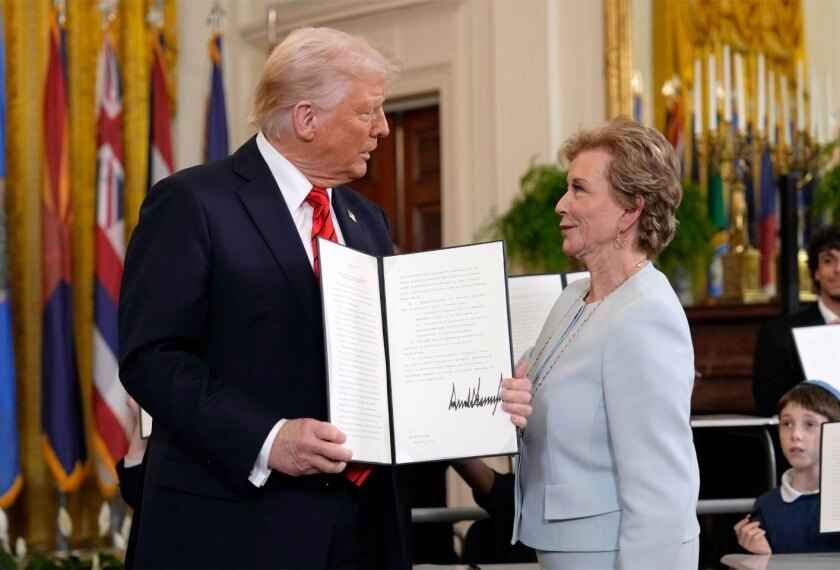
he Secretary of Education serves as the head of the U.S. Department of Education and acts as the President’s chief advisor on all educational matters. The role involves national leadership on policy, funding, student rights, educational standards, and oversight of federal education programs across K–12 and higher education.
Current Secretary of Education
As of 2025, the Secretary of Education is Linda McMahon. She assumed office in March 2025 after Senate confirmation.
Biography and Background of the Current Secretary
Linda McMahon has a long history in business and public service. Before becoming Secretary of Education, she held various leadership roles in both private-sector and government positions. Her educational priorities emphasize parental choice, increased state authority, and strengthening career-readiness programs.
Key Responsibilities and Powers of the Secretary
The Secretary of Education oversees and manages:
Federal student financial aid programs
K–12 and higher-education initiatives
Civil-rights enforcement within schools
National education research and data collection
Allocation and monitoring of federal funds
Collaboration with state and local school systems
Advising the President on nationwide education issues
The Secretary helps ensure educational access, quality, and equity across all U.S. states and territories.
Recent Major Initiatives or Policies
Under Linda McMahon’s leadership, early priorities include:
Increasing local and state control over schools
Revising federal education funding to improve transparency and efficiency
Expanding career and technical education pathways
Promoting parental involvement in school decision-making
Reevaluating federal regulatory burdens on states and institutions
These initiatives reflect a shift toward decentralizing federal oversight while strengthening workforce-aligned learning.
Importance of the Secretary in the U.S. Education System
The Secretary plays a pivotal role because:
Their decisions impact millions of students and educators
Federal funding and aid programs depend on their leadership
They influence national strategies for equitable access
They shape higher-education affordability and student-loan policy
They guide responses to emerging challenges such as technology shifts, demographic changes, and workforce needs
The position directly affects the educational trajectory of the entire nation.
How the Secretary of Education Is Chosen
The selection process includes:
Presidential Nomination
Senate Confirmation
Swearing-In and Assumption of Duties
There is no fixed term; the Secretary serves at the pleasure of the President.
Past Secretaries: Notable Previous Officeholders
The U.S. Department of Education has had several notable Secretaries, including:
Shirley Hufstedler — the first Secretary of Education (1979)
Rod Paige — known for education accountability reforms
Betsy DeVos — focused on school choice and charter schools
Miguel Cardona — emphasized equity and pandemic recovery efforts
Each brought unique priorities that influenced the country’s educational direction.
Challenges Facing the Current Secretary
The Secretary faces ongoing national challenges, such as:
Addressing disparities in education quality across communities
Managing debates over federal vs. local control
Improving higher-education affordability and student-loan management
Ensuring civil-rights protections in schools
Adapting policies to technological and workforce changes
Balancing political, social, and regional differences in education priorities
These challenges require careful leadership and strategic policy direction.
What to Watch: Future of the Department under the Current Secretary
Key areas to monitor include:
Potential restructuring of federal programs
Shifts in federal-to-state funding models
Expansion of career and technical education
Approaches to K–12 curriculum debates
Long-term strategies for student-loan reform
Evolving priorities in workforce development
The future direction of federal education policy will continue to unfold through these initiatives.
Frequently Asked Questions (FAQs)
1. Who is the current U.S. Secretary of Education?
The current U.S. Secretary of Education is Linda McMahon.
2. What does the Secretary of Education do?
They oversee federal education programs, manage student aid, enforce civil-rights laws, and advise the President on national education policy.
3. How long does a Secretary of Education serve?
There is no set term. They serve as long as the President wants them in the role.
4. Who appoints the Secretary of Education?
The President appoints the Secretary, and the U.S. Senate must confirm the nominee.
5. Why is the Secretary of Education important?
Because the position shapes national education policy, funding, equity initiatives, and access to learning opportunities for millions of Americans.